
Discernment: Learning to Recognize God’s Voice and Follow God’s Direction

Discernment is one of the most important practices in the Christian life. Every day, we make decisions about our relationships, responsibilities, finances, work, health, family, church, and future. Some choices are simple, while others carry lasting consequences. In moments of uncertainty, Christians often ask, “What does God want me to do?” Discernment is the prayerful process of seeking an answer to that question.
Discernment is more than making a good decision. It is learning to recognize the movement of God in our lives. It involves listening, praying, studying Scripture, seeking wise counsel, examining our motives, and remaining open to the guidance of the Holy Spirit. Discernment helps us distinguish between what is merely attractive and what is truly faithful, between what feels urgent and what is genuinely important, and between our own desires and God’s deeper calling.
For the people of Cornwall United Methodist Church, discernment is not only a personal spiritual practice. It is also essential to the life of the congregation.
Churches must discern how to serve their communities, how to respond to change, how to use their resources, and how to remain faithful to the mission of Jesus Christ. Whether we are making an individual decision or considering the future direction of the church, discernment invites us to slow down, listen carefully, and trust that God is already at work.
What Is Christian Discernment?
Christian discernment is the practice of recognizing God’s presence, wisdom, and direction in the circumstances of life. The word discernment refers to the ability to perceive, distinguish, and understand. Spiritually, it means learning to tell the difference between God’s guidance and the many other voices competing for our attention.
Those voices may include fear, ambition, pride, pressure, anger, insecurity, cultural expectations, and the opinions of others. Some of these influences are obvious, while others are subtle. We may convince ourselves that a decision is faithful because it benefits us personally. We may avoid a difficult responsibility and call it peace. We may pursue recognition and call it calling. Discernment requires honesty because our motives are often mixed.
Christian discernment begins with the belief that God desires relationship with us. God is not hiding from us or trying to make spiritual guidance impossible. At the same time, God does not always provide immediate answers. Sometimes discernment unfolds slowly. God may guide us through Scripture, prayer, trusted people, circumstances, inner conviction, and the wisdom gained through experience.
Discernment is not fortune-telling. It does not guarantee that we will know every detail of the future. Instead, it helps us make faithful decisions with the knowledge we currently have. We may not know exactly where a path will lead, but we can still take the next faithful step.
Discernment Begins with a Desire for God
The first question in discernment is not always, “What should I do?” A better question may be, “What is God forming within me?” Christian discernment is rooted in a desire to know God, love God, and become more like Christ.
If we seek guidance only because we want God to approve a decision we have already made, we are not truly discerning. We are looking for confirmation. Genuine discernment requires surrender. We come before God willing to hear an answer that may challenge our preferences or disrupt our plans.
Jesus modeled this surrender in the Garden of Gethsemane. Facing suffering and death, Jesus prayed honestly about his anguish. Yet he also prayed that the Father’s will would be done. His prayer was not passive or emotionless. It was an act of complete trust.
Our moments of discernment may not be as dramatic, but the same posture is necessary. We can bring God our fears, hopes, confusion, and desires. We do not have to pretend to be neutral. We can admit that we want a particular outcome. Then we can ask God to reshape our desires so that we seek faithfulness above comfort.
The goal of discernment is not merely to receive information from God. The deeper goal is communion with God. Through the process, our character is shaped, our trust grows, and our hearts become more attentive to grace.
Listening for God in Prayer
Prayer is central to discernment because discernment requires listening. Many people think of prayer primarily as speaking to God. We bring our concerns, needs, confessions, and requests. These are important parts of prayer, but prayer also includes silence.
Silence can feel uncomfortable. Our minds wander, our schedules call for attention, and we may wonder whether anything is happening. Yet silence creates room for deeper awareness. In silence, we begin to notice thoughts, emotions, and assumptions that may have been hidden beneath constant activity.
Listening prayer does not require us to hear an audible voice. God’s guidance may come as a growing conviction, a renewed awareness of Scripture, an unexpected sense of compassion, or a recognition that our current path is not producing the fruit of the Spirit.
When discerning a decision, it can be helpful to pray over it repeatedly rather than demanding an immediate answer. We may ask, “God, what are you inviting me to see? What am I ignoring? What fear is shaping me? What would love require? Where is your grace already present?”
Over time, patterns may emerge. A faithful direction may become clearer. However, we should remain humble. Not every strong feeling is a message from God. Prayer works together with Scripture, community, reason, and Christian wisdom.
The Role of Scripture in Discernment
Scripture provides the foundation for Christian discernment. The Bible reveals the character of God, the life and teachings of Jesus, the work of the Holy Spirit, and the values of God’s kingdom. Although Scripture may not address every modern decision directly, it forms the moral and spiritual framework through which Christians make choices.
For example, the Bible may not tell us which job to accept, where to live, or what specific ministry to begin. However, it consistently teaches values such as justice, mercy, humility, truthfulness, generosity, forgiveness, faithfulness, and love of neighbor.
A decision that requires dishonesty, exploitation, cruelty, or disregard for others cannot be justified as God’s will. God’s guidance will not contradict God’s character.
Scripture also helps correct our natural tendency to place ourselves at the center of every decision. The biblical story reminds us that God’s work is larger than our personal success. We are called to participate in God’s mission of healing, reconciliation, and redemption.
Reading Scripture for discernment is different from searching for a random verse to answer a question. Opening the Bible at random and treating the first verse we see as a personal command can lead to confusion. Faithful biblical discernment involves context, prayer, study, and attention to the larger message of Scripture.
As we become more familiar with the Bible, its language and values shape our imagination. We begin to recognize choices that reflect the way of Christ and choices that lead us away from it.
The Wesleyan Way of Discernment

United Methodists inherit a rich tradition of spiritual discernment from John Wesley. Wesley believed that Christian faith involves both the grace of God and the faithful response of the believer. He emphasized Scripture, reason, Christian tradition, and experience as important resources for theological reflection and spiritual decision-making.
Scripture remains primary because it provides the essential witness to God’s saving work. Tradition connects us with the wisdom of Christians who have gone before us. Reason allows us to think carefully, examine evidence, and consider consequences. Experience helps us recognize how God’s grace is being lived and encountered in real life.
These sources are sometimes described as the Wesleyan Quadrilateral. They are not four equal authorities, but they work together. When discerning, a United Methodist Christian may ask whether a decision is consistent with Scripture, whether it reflects the wisdom of Christian tradition, whether it is reasonable and responsible, and whether it bears witness to God’s grace in experience.
Wesley also placed great importance on Christian community. Early Methodists met in small groups where they prayed, studied, confessed, encouraged one another, and asked how their faith was being lived. Discernment was not treated as a purely private activity.
This Wesleyan approach remains valuable today. Faithful discernment engages the mind, heart, spirit, and community. It does not ask us to abandon reason in favor of emotion, nor does it reduce faith to intellectual analysis. Instead, it brings every part of life before God.
Seeking Wise and Faithful Counsel
God often guides us through other people. Trusted friends, pastors, mentors, family members, and mature Christians can help us see what we cannot see on our own.
Seeking counsel does not mean asking everyone we know until someone agrees with us. That approach usually produces more confusion. Instead, we should choose people who are honest, prayerful, wise, and willing to challenge us.
A faithful counselor will not attempt to control our decision. They may ask questions, identify patterns, offer perspective, and point us toward Scripture. They may notice when fear is driving us or when pride is disguising itself as confidence.
Sometimes the most helpful counsel comes from someone who has no personal interest in the outcome. They are able to listen without needing us to choose one direction or another.
Church community is especially important when the decision affects others. A call to ministry, a congregational change, a new outreach effort, or a major use of resources should not rest on one person’s private conviction alone. Shared discernment helps protect the church from impulsive decisions and invites the gifts of the whole body of Christ.
At Cornwall United Methodist Church, discernment can become a communal practice through prayer, conversation, Bible study, worship, and respectful listening. The Holy Spirit may speak through voices we did not expect, including younger members, older members, newcomers, longtime participants, and people whose experiences differ from our own.
Examining Our Motives
One of the most difficult parts of discernment is examining why we want what we want. Human motives are rarely simple. We may genuinely desire to serve God while also wanting approval, security, recognition, control, or comfort.
This does not mean that every mixed motive makes a decision wrong. It means we need to bring our motives into the light.
We might ask, “Am I drawn to this because it allows me to avoid something difficult? Am I resisting because I am afraid of failure? Am I seeking control? Am I trying to prove myself? Am I making this decision out of resentment? Am I choosing what is faithful or simply what is familiar?”
These questions are not meant to produce shame. They are invitations to honesty. God already knows our hearts and meets us with grace.
Sometimes discernment reveals that a good opportunity is not ours to pursue. At other times, it reveals that our resistance is rooted in fear rather than wisdom. A decision may be challenging and still be faithful. Another may feel easy and peaceful because it allows us to avoid growth.
The more honestly we examine ourselves, the more open we become to transformation.
Peace, Discomfort, and the Fruit of the Spirit
Christians sometimes describe discernment by saying, “I felt peace about it.” Inner peace can be an important sign of God’s guidance, but peace must be understood carefully.
God’s peace is not always the same as ease. A faithful decision may involve grief, uncertainty, sacrifice, and risk. Jesus did not avoid difficult paths simply because they caused distress. The prophets often experienced discomfort because they were called to speak difficult truths.
At the same time, persistent turmoil may signal that something needs further attention. We may be ignoring wisdom, acting too quickly, or moving from an unhealthy motive.
A more reliable test is the fruit of the Spirit. Does a possible decision encourage love, joy, peace, patience, kindness, generosity, faithfulness, gentleness, and self-control? Does it help us love God and neighbor more fully? Does it promote healing, truth, justice, and reconciliation?
We should also consider the fruit produced over time. Some choices offer immediate excitement but gradually create isolation, dishonesty, bitterness, or spiritual exhaustion. Other choices may begin with difficulty but produce deeper faithfulness and compassion.
Good discernment looks beyond the immediate emotional response and considers the kind of person a decision is helping us become.
Discernment in Times of Change
Change creates a special need for discernment. When familiar patterns shift, we may experience anxiety, grief, excitement, or resistance. Churches face changes in membership, leadership, culture, technology, community needs, and financial resources.
During times of change, it is tempting to react quickly. Some people may insist that everything remain as it has always been. Others may pursue change simply because it is new. Discernment avoids both extremes.
The question is not whether something is old or new. The question is whether it helps the church remain faithful to Christ’s mission.
Traditions can carry deep wisdom and provide a sense of identity. They connect generations and remind us of God’s past faithfulness. Yet traditions should serve the mission of the church rather than replace it.
Innovation can create new ways to reach people, serve neighbors, and communicate the gospel. Yet new ideas also require wisdom. Not every trend is appropriate for every congregation.
Faithful discernment honors the past, pays attention to the present, and remains open to the future God is creating. It asks what must be preserved, what may need to change, and what new ministry may be emerging.
Discernment and the Mission of the Church
The church does not exist only for its own members. It is called to make disciples of Jesus Christ, worship God, serve the community, care for those in need, and share the good news.
Congregational discernment must therefore include attention to the world beyond the church building. What are the needs of Lebanon, Cornwall, and the surrounding communities? Who feels forgotten, isolated, hungry, anxious, grieving, or spiritually disconnected? Where are children and families seeking support? Where are older adults facing loneliness? Where are people searching for meaning?
Discernment involves listening to the community as well as praying within the church. God may be inviting the congregation into ministry through a need that is already visible.
The church must also recognize its particular gifts. No congregation can do everything. A faithful ministry does not have to be large or impressive. It must be rooted in love, sustained by grace, and aligned with the gifts God has provided.
Cornwall United Methodist Church may discern its calling by asking, “What has God uniquely equipped us to do? Who are our neighbors? What relationships has God already given us? Where do we see openness, need, and possibility?”
When churches pursue mission from a place of discernment rather than competition, ministry becomes an act of participation in what God is already doing.
When the Answer Is Not Clear
There are times when we pray, study, seek counsel, and still do not know what to do. This can be frustrating, especially when a decision is urgent.
Uncertainty does not mean that we have failed spiritually. Even faithful Christians experience seasons when God’s direction is difficult to recognize.
In such moments, we may need to wait. Waiting is not the same as doing nothing. It can be a period of preparation, healing, learning, and deeper trust.
At other times, waiting is not possible. We must make the best decision we can with the information available. Christian faith does not promise that we will always make perfect choices. It promises that God’s grace remains present.
We can ask whether several options are morally faithful. Sometimes there is not one hidden correct choice. God may allow genuine freedom within the boundaries of love and wisdom.
We can also take a small step rather than demanding complete certainty. A conversation, trial period, application, meeting, or temporary commitment may provide new information.
Discernment is often less like receiving a complete map and more like walking with a lamp. We are given enough light for the next step.
Learning From Mistakes
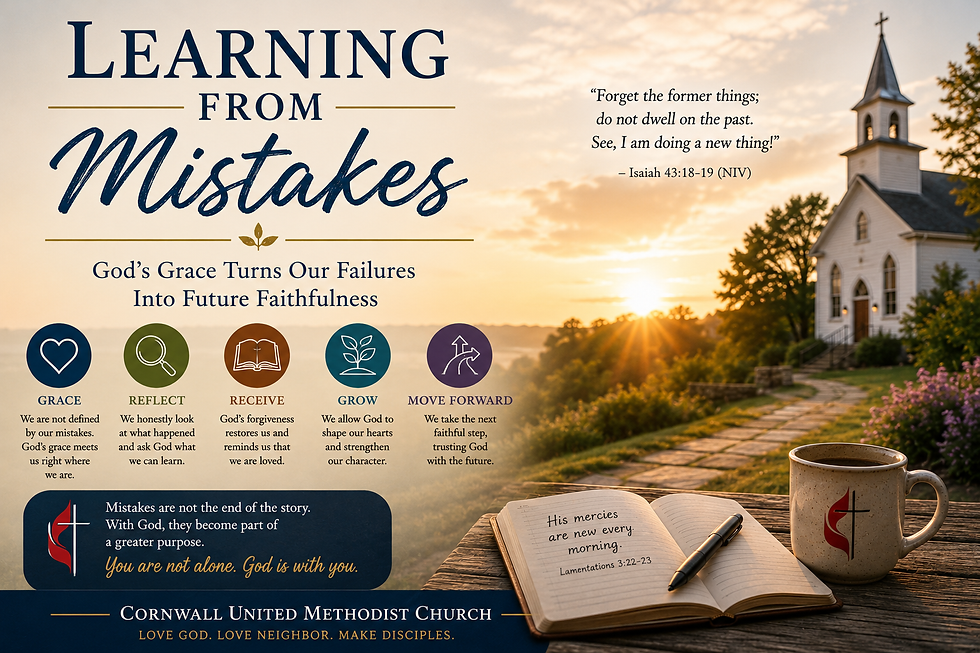
Discernment does not make Christians immune from mistakes. We may misunderstand, act too quickly, ignore counsel, or discover that circumstances have changed.
When a decision does not work as expected, we should resist the temptation to assume that God has abandoned us. A difficult outcome does not automatically mean that the decision was wrong. Faithful paths can include hardship.
At the same time, failure can become a teacher. We can ask what we overlooked, what we learned, and how God may be redirecting us.
God’s grace is larger than our mistakes. Scripture is filled with people whose failures became part of their transformation. Peter denied Jesus but became a leader in the early church. John Mark withdrew from a missionary journey but later became a valued partner in ministry.
Discernment includes the humility to revise a decision. Changing direction is not always weakness. It may be evidence that we are continuing to listen.
A church that practices discernment must create room for faithful experimentation. Not every ministry will succeed, and not every idea will continue forever. The goal is not perfection but faithfulness.
Making Discernment a Daily Practice
Discernment is most effective when it becomes part of daily Christian life rather than something we use only during a crisis.
Daily prayer helps us become familiar with God’s presence. Regular Scripture reading shapes our values. Worship recenters our lives in the story of God. Christian fellowship provides accountability and encouragement. Service connects faith with the needs of others.
A daily practice of reflection can also help. At the end of the day, we might review where we experienced gratitude, resistance, joy, anger, temptation, or compassion. We can ask where we noticed God and where we struggled to respond faithfully.
Over time, we begin to recognize patterns. Certain situations may consistently draw us toward generosity and love. Others may trigger fear, defensiveness, or pride. This awareness strengthens future discernment.
Discernment also requires patience. Spiritual maturity develops slowly. We learn through prayer, action, mistakes, relationships, and grace.
The more we practice listening in ordinary moments, the better prepared we are when major decisions arise.
Trusting God Through Every Decision
The deepest foundation of discernment is trust. We trust that God is good, that grace is active, and that we are not alone.
This trust does not eliminate responsibility. We still need to think, pray, listen, and act. Yet it frees us from the pressure to control every outcome.
Sometimes we become so afraid of making the wrong choice that we become unable to move. We imagine that one mistake will destroy God’s plan for our lives. Christian faith offers a different vision. God is able to work through imperfect people, complicated circumstances, and unexpected changes.
Discernment is not about earning God’s favor by making flawless decisions. It is about walking with God in faith.
As Cornwall United Methodist Church continues to worship, serve, grow, and respond to the needs of the community, discernment will remain essential. The congregation will face opportunities, challenges, transitions, and new possibilities. In every season, God invites the church to listen.
The same is true for each person. Whether we are considering a career change, repairing a relationship, beginning a ministry, caring for a loved one, or facing an uncertain future, we can bring the decision before God.
We can pray with honesty. We can listen in silence. We can study Scripture. We can seek wisdom from others. We can examine our motives. We can look for the fruit of the Spirit. Then, with humility and courage, we can take the next faithful step.
Discernment does not remove every question. It teaches us how to live faithfully within the questions. It reminds us that God’s presence is not limited to the final answer. God is present in the seeking, the waiting, the conversation, the uncertainty, and the decision itself.
As we learn to discern, we learn to trust. As we learn to trust, we become more willing to follow. And as we follow, we discover that God has been walking with us all along.
Frequently Asked Questions About Discernment
What Is Discernment in the Christian Life?
Discernment is the prayerful process of seeking God’s wisdom and direction. It involves listening to the Holy Spirit, studying Scripture, examining our motives, using reason, and seeking guidance from trusted Christian community. Discernment helps us recognize which choices lead toward greater faithfulness, love, truth, and service.
How Can I Tell Whether God Is Speaking to Me?
God’s guidance will be consistent with God’s character and the teachings of Scripture. It will not lead us toward dishonesty, cruelty, selfishness, or harm. A sense of conviction may also be confirmed through prayer, wise counsel, circumstances, and the fruit a decision is likely to produce. Christians should remain humble because not every thought, emotion, or desire is necessarily a message from God.
Does God Always Give a Clear Answer?
No. Sometimes God’s direction becomes clear quickly, but discernment often takes time. There may also be more than one faithful choice available. When the answer is uncertain, Christians can continue praying, gather reliable information, seek counsel, and take the next responsible step while trusting God’s grace.
What Role Does the Bible Play in Discernment?
The Bible is foundational to Christian discernment because it reveals God’s character, purposes, and values. Scripture may not name every modern situation directly, but it teaches enduring principles such as love, justice, mercy, faithfulness, humility, generosity, and truth. Any proposed direction should be examined in light of these biblical values.
What Is the Wesleyan Quadrilateral?
The Wesleyan Quadrilateral describes four important resources used in United Methodist reflection: Scripture, tradition, reason, and experience. Scripture is primary, while Christian tradition, careful reasoning, and personal or communal experience help believers understand how biblical truth applies to present circumstances.
Should I Rely on My Feelings When Making a Decision?
Feelings can provide useful information, but they should not be the only basis for discernment. Fear may cause us to resist a faithful calling, while excitement may draw us toward something unwise. Emotions should be considered alongside Scripture, prayer, reason, wise counsel, and the likely consequences of a decision.
Does Feeling Peace Mean I Am Making the Right Choice?
A sense of peace can be meaningful, but peace does not always mean comfort or ease. A faithful decision may still involve sacrifice, grief, uncertainty, or risk. The deeper question is whether the choice reflects Christlike love and produces the fruit of the Spirit over time.
Why Is Christian Community Important in Discernment?
Other people can help us recognize blind spots, question unhealthy motives, and notice possibilities we have overlooked. Trusted pastors, mentors, friends, and church members can offer prayer, experience, and perspective. Congregational decisions especially should involve shared prayer and careful listening rather than relying entirely on one person’s opinion.
What Questions Should I Ask When Discerning a Decision?
Helpful questions include whether the decision is consistent with Scripture, whether it helps us love God and neighbor, whether fear or pride is shaping the choice, and what consequences it may have for others. We can also ask whether the decision produces the fruit of the Spirit and whether trusted Christian advisors recognize wisdom in the direction.
What Should I Do When Two Choices Both Seem Good?
When several options appear faithful, God may be giving genuine freedom rather than hiding one perfect answer. We can compare the responsibilities, opportunities, risks, and likely effects of each choice. After prayerful reflection, we may need to choose wisely and move forward without waiting for absolute certainty.
Can I Make a Mistake Even After Praying?
Yes. Prayerful people can still misunderstand circumstances, overlook important information, or make imperfect decisions. Christian discernment does not guarantee flawless outcomes. It helps us act faithfully and remain open to correction. God’s grace continues to work even when we need to change direction.
How Can I Practice Discernment Every Day?
Daily discernment grows through regular prayer, Scripture reading, worship, reflection, and Christian fellowship. At the end of the day, we can consider where we experienced gratitude, resistance, temptation, compassion, or peace. These habits make us more attentive to God’s presence in both ordinary moments and major decisions.
How Can a Church Practice Discernment Together?
A church can practice discernment through prayer, worship, Scripture, respectful discussion, community listening, and thoughtful evaluation of its mission. Members should be willing to hear different perspectives and remain focused on serving Christ rather than defending personal preferences. Shared discernment asks what God may be inviting the congregation to preserve, change, begin, or release.
How Long Should Discernment Take?
There is no single timetable. Some decisions require immediate action, while others benefit from weeks or months of prayer and conversation. The amount of time should reflect the importance and consequences of the decision. Waiting can be faithful, but delay should not become an excuse to avoid responsibility.
What Is the Ultimate Goal of Discernment?
The ultimate goal is not simply to make successful decisions. It is to grow closer to God and become more faithful followers of Jesus Christ. Through discernment, Christians learn to listen, surrender, trust, and act in ways that reflect God’s love in the world.
Sources and Resources
The following resources provide additional biblical, theological, and practical guidance for understanding Christian discernment.
The United Methodist Church: Five Practical Tips for Discernment
This United Methodist resource presents practical ways to approach discernment through prayer, reflection, trusted relationships, and openness to God’s direction.
The United Methodist Church: Our Four Theological Guidelines
This article explains the four theological guidelines commonly associated with the Wesleyan Quadrilateral: Scripture, tradition, reason, and experience. These resources help United Methodists reflect prayerfully and responsibly on faith, ministry, and important decisions.
The United Methodist Church: Spiritual Gifts and Discernment
This resource describes discernment as a spiritual gift involving insight, sensitivity, and an ability to distinguish truth from falsehood. It can be used alongside prayer, Scripture, and Christian community when exploring spiritual gifts.
The United Methodist Church: Exploring Your Spiritual Gifts
The United Methodist Church offers a spiritual gifts assessment and related resources to help Christians recognize how they may be called to serve and strengthen the body of Christ.
Discipleship Ministries of The United Methodist Church
Discipleship Ministries provides worship materials, Bible studies, leadership resources, preaching guidance, and spiritual formation tools for churches and individual Christians.
United Methodist Ways of Praying
This Discipleship Ministries resource explores different forms of prayer within the United Methodist tradition, including silent prayer, spontaneous prayer, written prayer, and corporate prayer. These practices can help individuals and congregations become more attentive to God’s presence.
The United Methodist Book of Worship
The United Methodist Book of Worship includes prayers, services, Scripture readings, and worship resources that can support congregational discernment, personal reflection, and spiritual formation.
Romans 12:1–2
Romans 12:2 connects discernment with spiritual transformation and the renewing of the mind. It encourages Christians to resist being shaped by the world and to learn what is good, acceptable, and aligned with God’s will.
James 1:5–8
James teaches that those who lack wisdom should ask God, who gives generously. This passage is especially helpful when facing uncertainty or making an important decision.
Philippians 1:9–11
Paul prays that Christian love will grow in knowledge and discernment so that believers may recognize what is excellent and live faithfully.
Galatians 5:22–25
The fruit of the Spirit provides an important standard for discernment. Christians can evaluate whether a choice encourages love, joy, peace, patience, kindness, generosity, faithfulness, gentleness, and self-control.
Proverbs 3:5–6
This passage encourages believers to trust in God rather than relying entirely on their own understanding. It reminds Christians to acknowledge God in every area of life.
Psalm 119:105
Psalm 119 describes God’s Word as a lamp for our feet and a light for our path. The image reminds us that God may provide enough guidance for the next faithful step without revealing the entire journey at once.
1 Thessalonians 5:16–22
This passage encourages Christians to pray continually, remain open to the work of the Spirit, test everything, hold on to what is good, and reject what is harmful.
1 Corinthians 12:4–11
Paul explains that spiritual gifts come from the same Spirit and are given for the common good. The passage includes the discernment of spirits among the gifts of the Holy Spirit.
John Wesley and the Methodist Tradition
Readers interested in learning more about John Wesley, Methodist history, Christian holiness, and the development of the Wesleyan tradition can explore the historical and theological resources provided by The United Methodist Church.
Suggested Books for Further Reading
The Way of Discernment: Spiritual Practices for Decision Making by Elizabeth Liebert provides a structured Christian approach to making decisions through prayer, reflection, and spiritual practice.
Listening Hearts: Discerning Call in Community by Suzanne G. Farnham, Joseph P. Gill, R. Taylor McLean, and Susan M. Ward explores how individuals and communities can listen for God’s calling together.
The Celebration of Discipline by Richard J. Foster introduces important spiritual practices, including prayer, meditation, study, worship, service, and guidance.
Discerning the Voice of God by Priscilla Shirer explores how Christians can become more attentive to God through Scripture, prayer, obedience, and spiritual maturity.
A Plain Account of Christian Perfection by John Wesley explains Wesley’s understanding of Christian holiness, spiritual growth, and a life increasingly shaped by love for God and neighbor.


Comments